Infrastructure as Code · 8 min read
Terraform Best Practices for Production AWS Infrastructure
Infrastructure code earns trust when plans are reviewable, state is protected, and modules remain understandable.
Fundamentals and why this matters
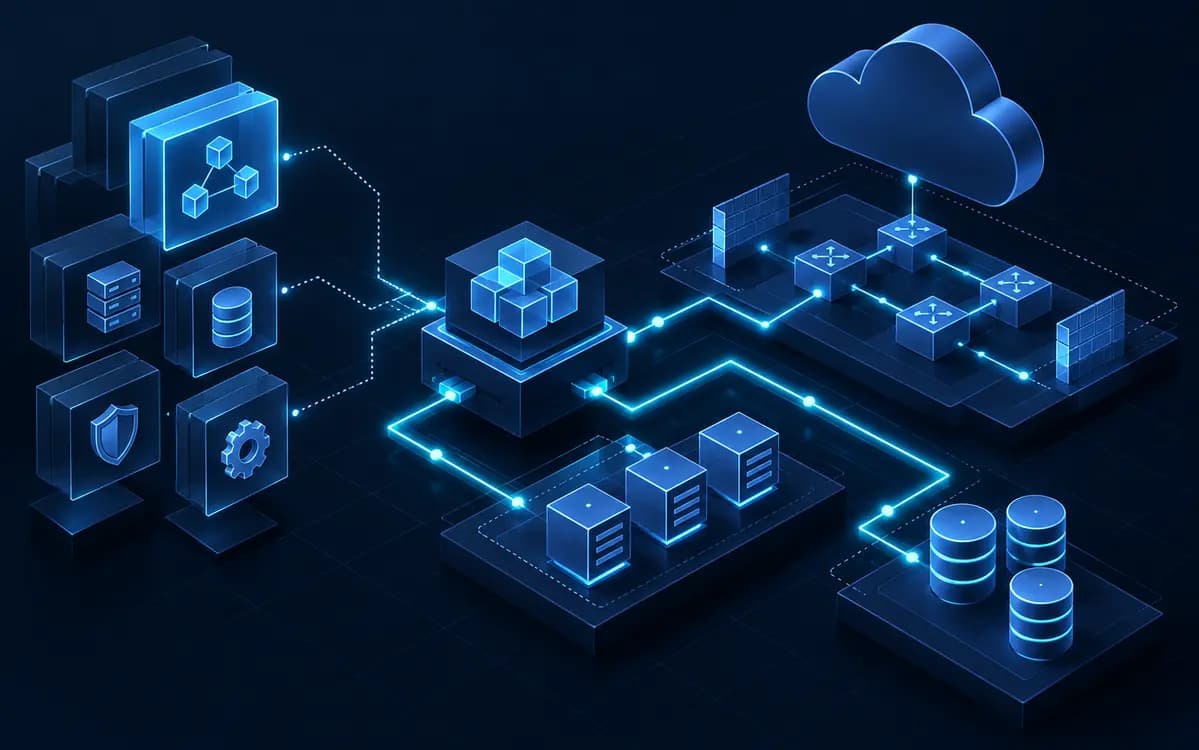
Terraform production practice is about controlled infrastructure change, not merely declaring resources. Providers describe APIs, resources define desired objects, variables parameterize environments, outputs expose intentional integration points, and modules package repeatable patterns. The critical shared dependency is state: it connects configuration to real infrastructure and must be treated as sensitive operational data.
Architecture and important components
Use a remote backend such as S3 with encryption and state locking through a supported locking mechanism. Scope state by environment and blast radius so a routine service change cannot accidentally affect an entire estate. A common repository separates reusable modules from environment compositions, with provider versions, Terraform versions, remote state configuration, and CI policies pinned. Outputs are consumed deliberately; they are not a substitute for unrestricted cross-stack access.
Production implementation guidance
Write small modules with clear inputs, defaults only where safe, and outputs that represent stable contracts. Run fmt, validate, static analysis, and plan in CI for each reviewed change. Review plans as change artifacts, then apply from a controlled branch or approved pipeline. Separate development, staging, and production through directory structure or carefully governed workspace use; do not copy and drift entire configurations. Import existing resources before managing them, and use lifecycle settings sparingly because they can hide risk.
A version-pinned provider and remote-state pattern
terraform {
  required_version = "~> 1.8"
  required_providers { aws = { source = "hashicorp/aws", version = "~> 5.0" } }
  backend "s3" { bucket = "example-tf-state"; key = "production/network.tfstate"; region = "us-west-1"; encrypt = true }
}
provider "aws" { region = var.region }
Security and change-control considerations
State can contain identifiers and sometimes sensitive values. Encrypt backend storage, restrict read access, audit state operations, and avoid writing secrets into resource arguments where a managed secret reference can be used. CI roles need only the provider actions relevant to the stack. Pin provider versions and review provider upgrades. Protect module release sources and require code review for changes that alter shared network, IAM, or encryption patterns.
Performance, monitoring, and operational considerations
Drift is expected in real environments, but unexamined drift is dangerous. Schedule plans in report-only mode, investigate console changes, and decide whether to import, reconcile, or intentionally stop managing a resource. Keep a runbook for failed applies, partial resource creation, state moves, and imports. A failed apply is not a signal to delete state; inspect the provider response and actual infrastructure first.
Production delivery and verification
Before changing a live $terraform best practices for production aws infrastructure design, record the current baseline: ownership, dependency map, service objective, capacity or policy limit, and the signals that would prove the change helped. A change without a baseline is difficult to validate and easy to misattribute after the next deployment or traffic shift.
Make the smallest reversible change first. Test it in a representative non-production environment, then release with a bounded blast radius, a named owner, and a rollback condition. Change windows are not a substitute for safety; the practical controls are an identified previous state, compatible data or configuration, and a clear decision point for stopping the rollout.
During and after release, correlate infrastructure signals with the user journey. Watch error rate, latency, saturation, availability, and the workload-specific signal that prompted the work. Record the observed outcome in the engineering decision log. This turns a one-off fix into operational knowledge that can be reused during planning, incident response, and the next review.
Finally, keep the runbook current. It should state what normal looks like, what breaks first, who owns the dependency, how to collect evidence, and which action is safe under pressure. Good documentation is concise enough to use during an incident and specific enough to prevent an unsafe guess.
Decision guidance
Use Terraform for repeatable cloud primitives and clear change review. It is less useful as a general-purpose imperative deployment engine. Start with network, identity boundaries, observability, and service foundations; then standardize modules only after a pattern has been used enough times to understand its variables and failure modes.
Related technical reading: AWS High Availability Architecture: What Businesses Should Consider · How to Build a Production-Ready CI/CD Pipeline
Practical implementation checklist
- Pin Terraform and provider versions.
- Use encrypted remote state with controlled access and locking.
- Review plans in CI and apply through a controlled identity.
- Keep modules small, tested, and intentionally versioned.
- Detect drift and document imports, moves, and recovery procedures.
Frequently asked questions
Should every resource be in one state file?
No. Split by environment and operational boundary to limit blast radius while avoiding so much fragmentation that dependencies become opaque.
Can secrets be stored in Terraform state?
Avoid it where possible. State is sensitive, but references to a managed secret are safer than persisting secret material.
When should a resource be imported?
Before Terraform becomes its source of truth for an existing object. Import, validate the configuration, then make planned changes.